
How Much Does It Cost to Build a Multi-Vendor Marketplace in 2026?
06 Oct, 2026


The distinction between machine learning and deep learning is fundamental to understanding the broader landscape of Artificial Intelligence. While machine learning provides accessible and efficient solutions for structured data problems, deep learning unlocks the potential to analyze complex, unstructured data at scale. As AI continues to drive digital transformation, its influence on the future of work will only intensify. The integration of AI in the workplace brings both significant opportunities and notable challenges—from enhanced productivity and innovation to concerns about job automation, data privacy, and cybersecurity. Organizations that embrace AI opportunities while proactively addressing AI risks will be better positioned to thrive in this evolving environment. By investing in AI skills, promoting reskilling and upskilling, and implementing robust cybersecurity measures, businesses can build a resilient and future-ready workforce.
Artificial Intelligence has moved beyond theoretical research and has become a cornerstone of modern innovation. Across industries—from healthcare and finance to manufacturing and retail—AI-driven technologies are reshaping how organizations operate, compete, and grow. The rise of Artificial Intelligence is not only accelerating digital transformation but also redefining the future of work, influencing how tasks are performed and how decisions are made.
At the heart of this transformation lie two critical subsets of AI: machine learning and deep learning. While often used interchangeably, these technologies differ significantly in their approach, complexity, and applications. Understanding these differences is essential for businesses, professionals, and policymakers navigating the evolving landscape of AI in the workplace.
This article explores the distinctions between machine learning and deep learning while also examining their broader impact on jobs, cybersecurity, and organizational strategy.
The adoption of AI has accelerated rapidly over the past decade, driven by the availability of large datasets, improved computational power, and advancements in algorithms. Organizations are leveraging machine learning models to analyze patterns, predict outcomes, and automate decision-making processes.
In the workplace, AI is increasingly integrated into everyday operations. From chatbots handling customer service to predictive analytics optimizing supply chains, AI-driven technologies are enhancing efficiency and productivity. Deep learning, a more advanced subset of machine learning, enables systems to process complex data such as images, audio, and natural language with remarkable accuracy.
This rise has fueled workforce automation, reducing the need for repetitive manual tasks while creating demand for more analytical and technical roles. Consequently, the AI impact on jobs is both transformative and disruptive, requiring organizations to rethink workforce strategies.
Before examining broader implications, it is important to distinguish between these two technologies.
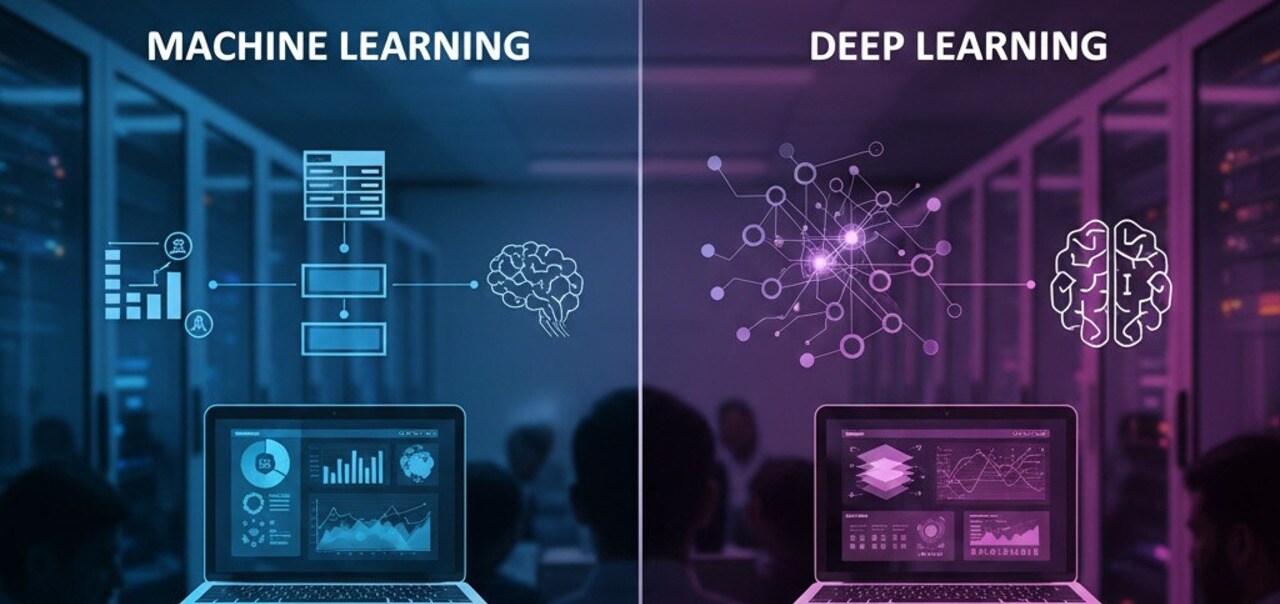
Machine Learning (ML) is a subset of AI that enables systems to learn from data and improve over time without explicit programming. It relies on algorithms such as decision trees, regression models, and support vector machines.
Deep Learning (DL) is a specialized branch of machine learning that uses artificial neural networks with multiple layers (hence “deep”) to analyze complex data patterns.
Machine learning typically performs well with structured data and smaller datasets. In contrast, deep learning requires vast amounts of data to function effectively, making it suitable for big data environments.
ML models are generally simpler and require less computational power. Deep learning models, however, demand high-performance hardware such as GPUs and involve more complex architectures.
In machine learning, human intervention is often needed to select and engineer features. Deep learning automates this process, allowing the model to extract features directly from raw data.
Machine learning is widely used in fraud detection, recommendation systems, and predictive analytics. Deep learning excels in image recognition, speech processing, and autonomous systems.
Understanding these differences helps organizations choose the right approach based on their data, resources, and objectives.
The integration of AI into the workplace is fundamentally altering job roles. Routine and repetitive tasks are increasingly handled by automated systems, leading to a shift in skill requirements.
Professionals are now expected to develop AI skills, including data analysis, programming, and familiarity with AI tools. Roles such as data scientists, AI engineers, and machine learning specialists are in high demand.
At the same time, non-technical roles are also evolving. Employees must understand how to collaborate with AI systems, interpret insights, and make informed decisions. This shift underscores the importance of reskilling and upskilling to remain competitive in an AI-driven economy.
While job automation may displace certain roles, it also creates new opportunities for innovation and growth.
Artificial Intelligence offers numerous advantages that can enhance productivity, innovation, and economic growth.
AI systems can process large volumes of data quickly and accurately, reducing manual effort and improving operational efficiency.
Machine learning models provide data-driven insights, enabling organizations to make more informed and strategic decisions.
Despite concerns about automation, AI is generating new roles in areas such as data science, AI development, and cybersecurity.
AI-driven technologies allow businesses to deliver tailored experiences through recommendation systems and predictive analytics.
From autonomous vehicles to medical diagnostics, AI is driving innovation and opening new possibilities across sectors.
These AI opportunities highlight the transformative potential of AI when implemented responsibly.
While AI presents significant benefits, it also introduces challenges that must be carefully managed.
Automation may replace certain roles, particularly those involving repetitive tasks, leading to workforce disruption.
AI systems can inherit biases from training data, raising concerns about fairness and ethical AI practices.
The extensive use of data in AI systems increases the risk of breaches and misuse, making data privacy a critical concern.
Over-reliance on AI may reduce human oversight and critical thinking in decision-making processes.
Developing and maintaining AI systems, particularly deep learning models, can be expensive and resource-intensive.
Addressing these AI risks is essential for sustainable adoption and long-term success.
As AI systems become more prevalent, the importance of cybersecurity in AI cannot be overstated. AI introduces new vulnerabilities that can be exploited by malicious actors.
Cybercriminals can use AI to develop sophisticated attacks, including deepfakes and automated hacking tools.
AI systems often rely on large datasets, making them attractive targets for data breaches.
Machine learning models themselves can be attacked through techniques such as adversarial attacks, compromising their reliability.
Organizations must adhere to data protection regulations to ensure responsible AI usage.
Cybersecurity strategies must evolve alongside AI technologies to address emerging threats.
Effective management of AI security threats is crucial to maintaining trust and safeguarding organizational assets.
To harness the benefits of AI while mitigating risks, organizations must adopt strategic approaches.
Providing training programs helps employees adapt to new technologies and roles in an AI-driven workplace.
Organizations should ensure transparency, fairness, and accountability in AI systems.
Robust security frameworks are essential to protect against AI-related threats.
Encouraging collaboration enhances productivity and ensures balanced decision-making.
Investing in adaptable AI solutions supports long-term growth and innovation.
These strategies enable organizations to navigate the complexities of AI adoption effectively.
Leadership plays a critical role in guiding organizations through the AI transformation. Leaders must not only understand the technical aspects of AI but also its broader implications for business and society.
Effective leaders prioritize ethical considerations, invest in employee development, and foster a culture of innovation. They must also address concerns related to AI impact on jobs, ensuring that transitions are managed responsibly.
Strategic decision-making, clear communication, and a forward-thinking mindset are essential for leveraging AI’s full potential while minimizing risks.