How Much Does It Cost to Build a Multi-Vendor Marketplace in 2026?
Learn what factors determine the cost of building a multi-vendor marketplace in 2026. Explore key features, project cost levels, and ready-made vs custom development options.
Launching a multi-vendor digital commerce platform can create opportunities for marketplace operators to earn through commissions, subscriptions, featured listings, and other revenue models. However, understanding the cost to build a multi vendor marketplace in 2026 is critical for startup founders and business owners before committing capital.
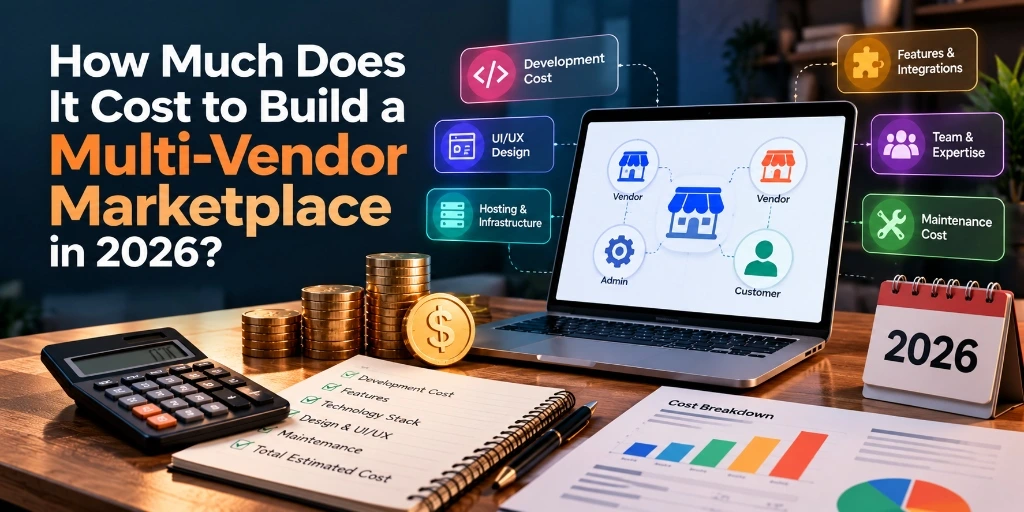
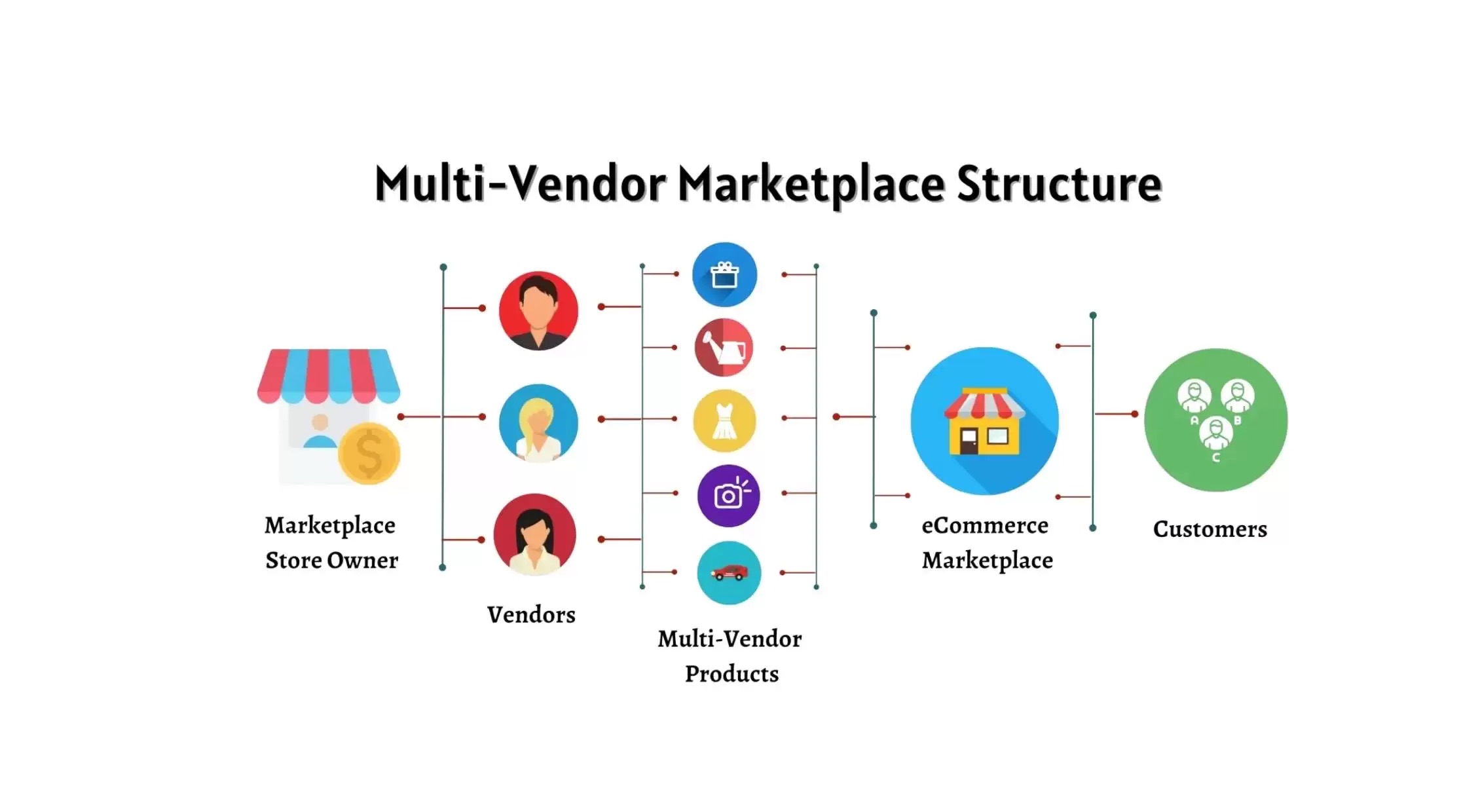
Building a multi-vendor marketplace is very different from setting up a standard online store. In a single-seller store, one business manages products, takes payments, and ships orders. In a multi-vendor marketplace, your platform must serve three distinct groups simultaneously: customers buying products, independent vendors managing their own listings and orders, and your team managing the entire platform.
This guide explains what actually determines the cost of developing a marketplace, how different features impact your budget, and how to choose between ready-made software and custom development.
Multi-Vendor Marketplace Development Cost by Type
Multi-vendor marketplace development costs vary depending on whether you choose a ready-made solution, customize an existing platform, or build the marketplace entirely from scratch. Here is a practical overview of TechXons' current ready-made marketplace pricing and custom development options.
| Marketplace Type |
TechXons Starting Price |
Description |
| Ready-Made Marketplace — Web |
$1,399 |
Multi-vendor marketplace without a mobile app. Suitable for businesses that want to launch with a web-based marketplace. |
| Ready-Made Marketplace — Web + App |
$2,499 |
Multi-vendor marketplace with a mobile app, suitable for businesses that want web and mobile access. |
| Customized Marketplace |
Custom Quote |
Pricing depends on additional features, integrations, design changes, business workflows, payment/shipping requirements, and other customization. |
| Fully Custom Marketplace |
Custom Quote |
Built around specific business requirements, custom workflows, integrations, scalability, and platform requirements. |
Note: The prices above apply to the respective TechXons ready-made marketplace solutions. Additional customization, third-party integrations, new features, design changes, or custom business workflows may affect the final project cost.
Want to know which marketplace option fits your business? Share your requirements with TechXons and get a detailed development estimate based on your features and workflow.
Get an Estimate
Multi-Vendor Marketplace Development Cost at a Glance
Because every marketplace has unique functional and workflow requirements, development costs are determined by the complexity of each component:
| Marketplace Component |
Cost Impact |
| Customer marketplace (Web storefront, cart, checkout) |
Low – High |
| Vendor dashboard (Product & order management) |
Medium |
| Admin panel (Governance, commission, & moderation) |
Medium |
| Mobile apps (iOS & Android apps) |
High |
| Payment splitting and automated vendor payouts |
Medium – High |
| Live carrier shipping integrations |
Medium – High |
| Custom business logic & unique workflows |
High |
| ERP, accounting, & external API integrations |
High |
| Multi-language & multi-currency localization |
Medium – High |
The final development cost depends on the number of platforms, business workflows, integrations, automation requirements, and level of customization.
Why Are Multi-Vendor Marketplaces More Expensive Than Standard Online Stores?
When people ask why marketplace software costs more than a standard e-commerce website, the answer comes down to three operational layers that must work together:
- The Customer Storefront: Customers need to search through products from different sellers, add items from multiple vendors into a single cart, and pay in one transaction while seeing accurate shipping estimates for each seller.
- The Vendor Dashboard: Every seller needs a private portal to add products, set pricing, track inventory, view incoming orders, print shipping slips, and track their payout balance.
- The Admin Management Panel: Platform owners need a central console to approve new vendors, review product listings, set platform commission rates, handle customer disputes, process refunds, and monitor platform earnings.
Behind these interfaces sits business logic that standard stores never need. For example, if a customer buys a shirt from Vendor A and shoes from Vendor B in a single order, the system must split the order into two fulfillment tracks, calculate separate shipping fees, deduct your commission, and route the correct net amounts to each vendor.
Multi-Vendor Marketplace Development Cost by Project Tier
To budget realistically, it helps to identify which level of marketplace matches your business model and launch requirements:
1. Basic Marketplace
A basic marketplace focuses on the core transaction loop: allowing sellers to list items, customers to browse and buy, and admins to oversee orders.
- What Is Included: Responsive web platform, essential customer cart and checkout, standard vendor onboarding, basic product management, single flat-rate commission, standard payment gateway (single payment collection), and manual vendor payout tracking.
- What Makes It More Expensive: Adding mobile apps, multiple payment gateways, or custom vendor registration approval workflows.
- Best Suited For: Early-stage startups, local niche directories, or entrepreneurs validating customer demand before committing significant capital.
2. Standard Commercial Marketplace
A standard commercial marketplace adds automated workflows, enhanced vendor management, and cross-platform mobile access.
- What Is Included: Web platform plus native iOS and Android mobile apps (or cross-platform app), bulk product upload (CSV/Excel) for vendors, category-specific commissions, automated payment splitting, vendor rating and review system, order tracking, and automated email/SMS notifications.
- What Makes It More Expensive: Integrating live carrier shipping APIs (FedEx, DHL), custom UI/UX themes, multi-currency checkout, and advanced discount/coupon engines.
- Best Suited For: Growing retail brands, regional multi-seller stores, or businesses with an established base of vendors ready to onboard.
3. Advanced Marketplace
An advanced marketplace is built for high catalog volume, complex vendor agreements, and multi-region operations.
- What Is Included: Dedicated high-speed search and filtering, multi-warehouse shipping calculations, tiered subscription plans for vendors, automated bank payout disbursements, localized multi-language and multi-currency support, return and dispute arbitration systems, and detailed business analytics.
- What Makes It More Expensive: Infrastructure scalability, including how much traffic, data, orders, vendors, and payment activity the platform needs to handle as it grows, along with complex tax calculation integrations and automated fraud detection systems.
- Best Suited For: Established e-commerce businesses scaling across regions, high-volume B2C marketplaces, or funded startups competing in major consumer verticals.
4. Custom / Enterprise Marketplace
An enterprise marketplace addresses unique commercial models that cannot run on standard e-commerce software.
- What Is Included: Bespoke business logic (e.g., custom B2B wholesale quotation workflows, multi-party escrow holds, dynamic contract negotiations, or equipment leasing terms), direct integration with external enterprise ERPs (SAP, NetSuite) and third-party logistics (3PL) warehouses, custom role-based permissions, and dedicated cloud infrastructure.
- What Makes It More Expensive: Custom microservice architecture, strict enterprise compliance requirements, extensive integration testing, and dedicated service level agreements (SLAs).
- Best Suited For: B2B manufacturers and distributors, wholesale trading platforms, or companies with proprietary trade flows.
Multi-Vendor Marketplace Cost Framework
Rather than looking at generic averages, it is more practical to look at how specific functional components impact development effort:
| Cost Factor |
What Is Included |
What Increases the Cost |
| Planning & Scope Definition |
Defining user roles, feature lists, commission logic, and technical requirements |
Unclear business rules, changing requirements during development |
| UI/UX Design |
Interface layouts for buyer website, mobile screens, vendor dashboard, and admin panel |
Fully bespoke design from scratch, complex user journeys, custom branding assets |
| Customer Platform |
Product catalog, multi-vendor cart, customer checkout, order tracking, reviews |
Native iOS and Android mobile apps, localized multi-currency support, custom search filters |
| Vendor Dashboard |
Product management, inventory controls, order fulfillment status, earnings reports |
Bulk CSV/Excel product uploads, automated inventory sync with external stores, advanced analytics |
| Admin Panel |
Vendor onboarding approvals, category setup, commission configuration, order oversight |
Tiered commission rules, automated tax calculation per region, dispute arbitration workflows |
| Payments & Payouts |
Customer checkout gateway integration, recording vendor balances, payout requests |
Automated payment splitting (e.g. Stripe Connect), multiple regional payment gateways, automated bank transfers |
| Third-Party Integrations |
Transactional emails, SMS notifications, basic shipping calculator |
Live carrier shipping APIs, automated address verification, external accounting or ERP software sync |
| Testing & Launch |
Functional testing across all user roles, payment testing, basic load testing, server deployment |
Testing across many devices/browsers, complex split-order refund scenarios, high-traffic stress testing |
What Features and Requirements Make a Marketplace More Expensive?
When software development teams evaluate a marketplace scope, specific requirements add significant development hours:
- Mobile Apps vs. Responsive Web Only: Building a responsive web application is faster and costs less. Adding dedicated iOS and Android mobile apps introduces separate app store requirements, mobile interface design, and API synchronizations.
- Automated Split Payments vs. Manual Payouts: Paying vendors manually on a fixed schedule (such as every Monday via bank transfer) is straightforward to implement. Automatically calculating commissions, splitting payments at checkout, and handling refunds or chargebacks across multiple sellers requires significantly more backend logic and payment gateway compliance.
- Complex Commission Structures: A simple flat commission applied to every sale is straightforward. If you need dynamic commissions that vary by product category, seller subscription tier, sales volume, or product weight, the calculation engine requires extra custom development and testing.
- Shipping and Logistics Integrations: Flat-rate or vendor-defined shipping rates are simple to set up. Integrating live carrier APIs (like FedEx, DHL, or regional courier aggregators) to calculate split shipping dynamically based on package weight and multiple vendor warehouse origins adds technical complexity.
- Advanced Search and Filtering: For a few hundred products, standard database search works fine. When a marketplace grows to tens of thousands of items with complex variations (color, size, material, delivery time, vendor distance), a dedicated search engine integration is needed to keep page load times fast.
- Multi-Language and Multi-Currency Support: Supporting multiple currencies means handling real-time exchange rate conversions, localized payment methods, and international tax rules.
- External ERP or Inventory Sync: If vendors want their marketplace stock to automatically sync with their physical store inventory or external software, building custom API connections takes significant engineering effort.
Ready-Made Marketplace Software vs. Custom Development
One of the biggest strategic decisions is choosing between building on top of a ready-made marketplace software foundation or building a custom platform from scratch.
| Consideration |
Ready-Made Marketplace Solution |
Custom Development From Scratch |
| Best Suited For |
Businesses with standard e-commerce workflows wanting to launch and validate their idea quickly |
Businesses with unusual business rules, unique transaction flows, or complex legacy system integrations |
| Initial Development Time |
Fast (Focus is on branding, configuration, and launch) |
Longer (Full development lifecycle from planning to coding) |
| Customization Level |
Good for standard branding, custom themes, and moderate workflow tweaks |
Complete flexibility to build any feature or interface exactly as imagined |
| Initial Budget |
Significantly lower upfront cost |
Higher upfront investment due to dedicated engineering hours |
When to Choose a Ready-Made Foundation
A ready-made marketplace solution (such as an Amazon Clone for B2C retail or an Alibaba Clone for B2B wholesale) provides pre-built customer, vendor, and admin modules that are already developed and tested.
This approach makes the most sense if your core business follows standard multi-vendor marketplace workflows and your primary goal is to get to market quickly, start onboarding vendors, and test consumer demand without spending months on foundational coding.
When Custom Development Makes More Sense
Bespoke custom software development is the right choice when your marketplace does not follow conventional e-commerce models. For example, if you are building a specialized equipment leasing marketplace with dynamic multi-stage contracts, a multi-currency barter exchange, or a platform that must connect directly to internal legacy enterprise systems, starting from scratch gives your team complete architectural control.
How TechXons Estimates Marketplace Development Cost
When clients consult with TechXons to plan a marketplace project, we do not provide arbitrary numbers. We review key operational and technical questions to define an accurate scope:
- Target Business Model: Is this B2C retail, B2B wholesale trade, service booking, or C2C peer-to-peer exchange?
- Platform Scope: Do you need a web portal only, or web plus iOS and Android mobile apps at launch?
- Vendor Onboarding Process: Will vendor signups be automated with digital KYC document uploads, or manually approved by your admin team?
- Catalog and Inventory Structure: Are you selling physical goods, digital downloads, or time-based services? Will vendors need bulk CSV uploads?
- Commission and Payout Architecture: Will you use a flat platform percentage, tiered rates by category, or vendor subscription plans? Will payouts be automated via split gateways or handled manually?
- Payment and Shipping Gateways: Which regional and international payment gateways are required? Are live carrier shipping APIs needed?
- Third-Party Integrations: Will the platform need to synchronize with external accounting software, ERPs, or external warehouse systems?
- Deployment and Maintenance: What level of server infrastructure, security management, and ongoing technical support will the platform require?
Ongoing Costs to Plan for After Launch
Launching the software is only the first step. To keep your marketplace running smoothly, your budget should account for standard ongoing operational expenses:
- Cloud Server Hosting: Reliable cloud hosting (such as AWS, DigitalOcean, or Google Cloud) to handle web traffic, media storage for vendor product images, and automated database backups.
- Payment Gateway Fees: Standard per-transaction processing fees charged by payment providers (e.g., Stripe or PayPal) on every customer transaction.
- SMS and Transactional Email Services: Costs for sending order confirmations, vendor notifications, and phone number verification OTPs (via providers like Twilio or SendGrid).
- Software Maintenance and Support: Regular security updates, framework upgrades, bug fixes, and server monitoring via professional IT support and maintenance services.
- App Store Developer Accounts: Apple ($99/year) and Google Play (one-time fee) developer accounts if you publish mobile apps.
How to Reduce Marketplace Development Costs Without Hurting Quality
You do not need to cut corners on security or user experience to keep your project affordable. Here are practical ways to manage development costs:
- Define Your Core Workflows Before Writing Code: Clearly document how vendors register, how orders are fulfilled, and how commissions are calculated. Changing business rules midway through development is one of the biggest causes of budget overruns.
- Start with Essential Features First: Focus on making the core transaction loop seamless—discovery, cart, payment, vendor fulfillment, and payout tracking. Advanced features like AI product recommendations or loyalty programs can be added after you have active buyers and sellers.
- Use a Ready-Made Foundation if Possible: If standard marketplace features fit 80% of your needs, customizing a ready-made platform is usually much faster and more cost-effective than building everything from zero.
- Keep Shipping and Tax Rules Simple at Launch: Start with standard shipping rates or vendor-managed flat rates before building complex automated carrier API integrations.
- Choose Cross-Platform Mobile Tech: If you need mobile apps, using cross-platform technologies (like Flutter) allows a single engineering team to build both iOS and Android apps from one codebase, which can reduce duplicated development and maintenance work compared with maintaining separate native codebases.
Frequently Asked Questions
TechXons' ready-made multi-vendor marketplace starts at $1,399 without a mobile app and $2,499 with a mobile app. Customization, additional integrations, new features, and custom business workflows can increase the final project cost. Fully custom marketplace development is quoted based on the specific project requirements.
The biggest cost drivers are mobile applications (iOS and Android), automated payment splitting systems (like Stripe Connect), real-time carrier shipping integrations, dynamic multi-tiered commission logic, and custom third-party ERP or inventory synchronizations.
When a customer checks out, the marketplace software records the total sale, calculates the platform's commission based on your configured rules, and credits the remaining amount to the vendor's account balance. Payouts to vendors can then be handled automatically through split payment gateways or paid out manually on a regular schedule via bank transfer.
Yes. As long as the solution includes clean source code, developers can customize the user interface, add new payment gateways, implement custom commission rules, or build tailored integrations as your business grows.
Common ongoing costs include cloud server hosting, payment gateway transaction fees, transactional SMS/email services, app store developer fees, and regular software maintenance and security updates.
Get a Multi-Vendor Marketplace Cost Estimate
If you have a marketplace concept, the next step is turning your feature list into a clear development scope. TechXons can review your business requirements, recommend ready-made software or custom development, and prepare a detailed project scope and development estimate.
Request Your Marketplace Scope Estimate