
How Much Does It Cost to Build a Multi-Vendor Marketplace in 2026?
06 Oct, 2026


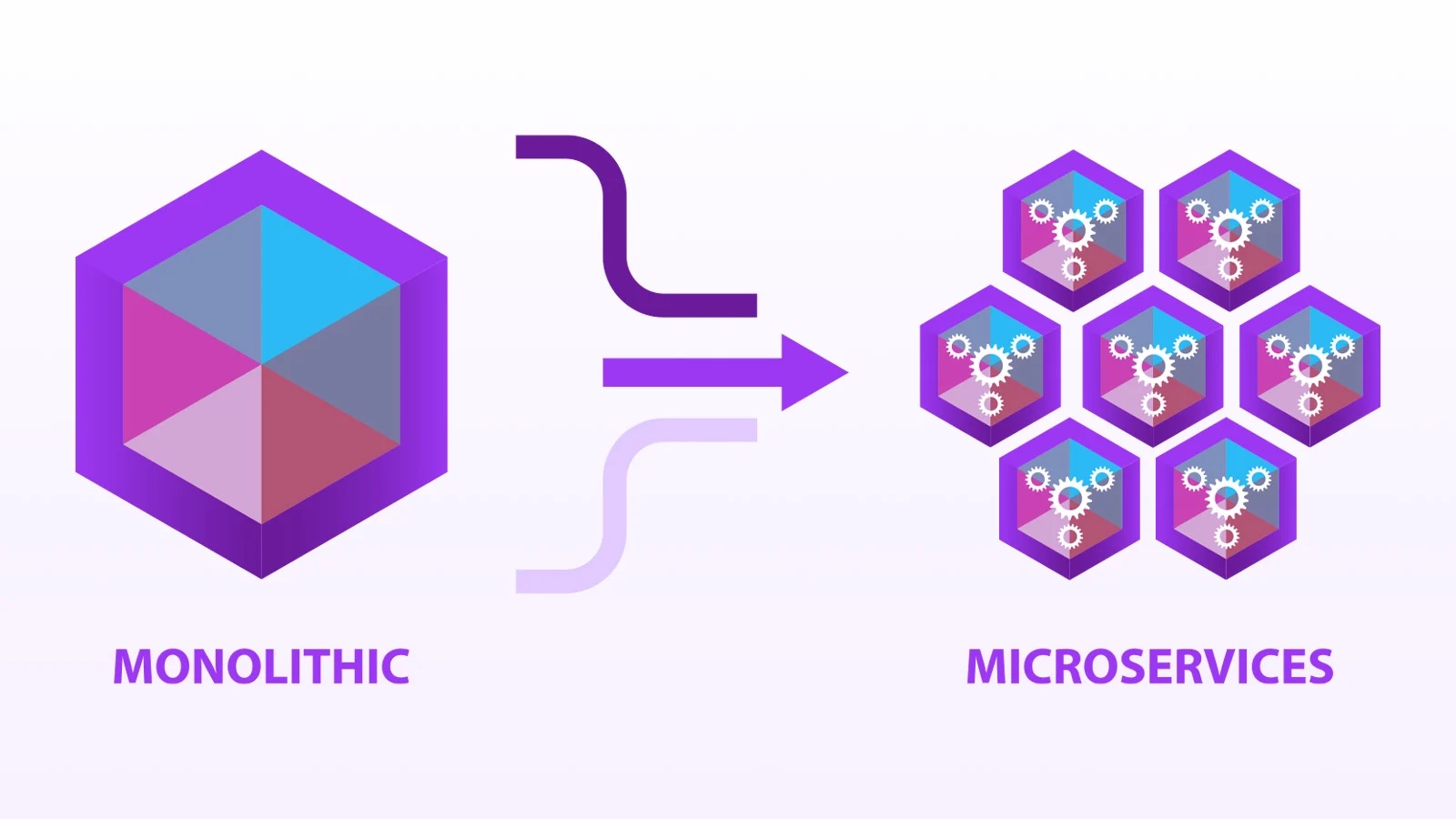
The journey from monolithic applications to modern scalable architectures reflects the continuous pursuit of efficiency, flexibility, and performance. Each phase in this evolution has addressed the limitations of its predecessor while introducing new possibilities.
In the ever-evolving landscape of software engineering, full-stack development has undergone a remarkable transformation. From the early days of monolithic applications to today’s distributed, cloud-native systems, the journey reflects not only technological advancement but also a shift in how developers think about scalability, performance, and user experience. Understanding this evolution is essential for engineers aiming to build robust, future-ready applications.
Traditionally, web applications were built as monoliths—single, unified codebases where frontend, backend, and database logic were tightly coupled. This architecture was simple to develop and deploy. A single server handled all requests, and scaling often meant upgrading the server hardware rather than restructuring the application.
While monoliths offered ease of development, they presented significant challenges as applications grew. Codebases became difficult to maintain, deployment cycles slowed down, and even minor changes required redeploying the entire system. Debugging issues was also complex, as a single fault could impact the entire application.
To address the growing complexity, developers adopted structured design patterns such as Model-View-Controller (MVC). This approach separated concerns into three layers:
Model: Handles data and business logic
View: Manages the user interface
Controller: Acts as a bridge between Model and View
MVC brought organization and clarity, making applications easier to maintain. Frameworks across languages—PHP, Java, Python—embraced this pattern, and it became a standard in web development.
However, while MVC improved internal structure, it did not solve the fundamental scalability limitations of monolithic systems.
As applications expanded and user bases grew, the need for scalability and flexibility led to the adoption of Service-Oriented Architecture (SOA). In this model, applications were broken into smaller, reusable services that communicated over a network.
Each service handled a specific business function—authentication, payments, notifications—and could be developed and deployed independently. This modular approach improved scalability and allowed teams to work in parallel.
Yet, SOA introduced its own complexities. Managing communication between services, ensuring data consistency, and handling failures became challenging tasks.
Microservices refined the principles of SOA by emphasizing smaller, independently deployable services. Each microservice is responsible for a single function and operates as a standalone unit.
Key advantages include:
Independent Deployment: Teams can release updates without affecting other services
Scalability: Individual components can be scaled based on demand
Technology Flexibility: Different services can use different technologies
For instance, an e-commerce platform might have separate microservices for user management, product catalog, order processing, and payment handling.
However, microservices require robust infrastructure. Developers must manage service discovery, API gateways, load balancing, and inter-service communication. Without proper design, the system can become fragmented and difficult to manage.
With the rise of cloud platforms, development practices shifted toward cloud-native architectures. These systems are designed specifically to leverage cloud computing capabilities such as auto-scaling, distributed storage, and managed services.
Technologies like containers and orchestration tools enable developers to package applications with their dependencies and deploy them consistently across environments. This ensures reliability and simplifies deployment pipelines.
Cloud-native development also promotes:
Resilience: Systems are designed to handle failures gracefully
Elasticity: Resources scale dynamically based on usage
Observability: Advanced monitoring and logging provide deep insights
Frontend development has also transformed significantly. Early websites relied on static HTML pages with minimal interactivity. Over time, JavaScript frameworks introduced dynamic, responsive user interfaces.
Modern frontend development emphasizes:
Component-Based Architecture: Reusable UI components improve maintainability
State Management: Efficient handling of application state enhances performance
Client-Side Rendering (CSR) and Server-Side Rendering (SSR): Balancing performance and SEO
Frameworks now support hybrid rendering approaches, ensuring faster load times and improved user experience.
In contemporary systems, APIs serve as the backbone of communication between frontend and backend. An API-first approach ensures that all functionalities are exposed through well-defined endpoints.
Benefits include:
Consistency Across Platforms: Web, mobile, and third-party integrations use the same APIs
Decoupling: Frontend and backend can evolve independently
Scalability: APIs can be optimized and scaled separately
Security measures such as token-based authentication and role-based access control are integral to API design.
Modern development is incomplete without DevOps practices. Continuous Integration and Continuous Deployment (CI/CD) pipelines automate testing, building, and deployment processes.
Key advantages:
Faster Releases: Frequent updates with minimal downtime
Improved Quality: Automated testing reduces errors
Collaboration: Development and operations teams work seamlessly
Infrastructure as Code (IaC) further enhances efficiency by allowing environments to be defined and managed through code.
Databases have also evolved to meet modern demands. While traditional relational databases remain relevant, NoSQL databases provide flexibility for handling unstructured data.
Modern systems often use a combination of:
Relational Databases: For structured, transactional data
NoSQL Databases: For scalability and flexibility
Caching Systems: To improve performance and reduce latency
Efficient data management strategies are crucial for maintaining performance and consistency in distributed systems.
As systems become more complex, security becomes a top priority. Developers must implement comprehensive measures to protect data and ensure system integrity.
Essential practices include:
Authentication and Authorization: Secure access control mechanisms
Encryption: Protecting data in transit and at rest
Input Validation: Preventing common vulnerabilities such as injection attacks
Security is no longer an afterthought—it must be integrated into every stage of development.
Despite advancements, modern development introduces new challenges:
Complexity: Managing multiple services and technologies
Debugging: Identifying issues across distributed systems
Cost Management: Optimizing cloud resource usage
Engineers must balance innovation with practicality, ensuring that architectural decisions align with business requirements.
Looking ahead, several trends are shaping the future:
Serverless Architecture: Eliminating the need to manage servers
Edge Computing: Processing data closer to users for faster response times
AI Integration: Enhancing applications with intelligent features
The focus is shifting toward building systems that are not only scalable but also intelligent and adaptive.