
How Much Does It Cost to Build a Multi-Vendor Marketplace in 2026?
06 Oct, 2026


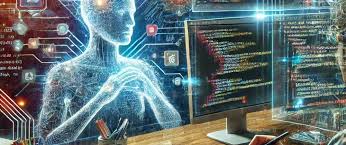
AI is fundamentally changing the landscape of software development. It is streamlining processes, improving quality, and enabling faster innovation. While challenges remain, the benefits of AI-powered tools are undeniable. Developers who embrace this technology and learn to leverage its capabilities will be well-positioned to thrive in the evolving digital ecosystem. Rather than replacing human developers, AI is augmenting their abilities, allowing them to focus on what truly matters: creativity, problem-solving, and building impactful technology.
At the core of this shift is the integration of machine learning models into development environments. These systems are trained on massive datasets of code and programming patterns, enabling them to understand context, suggest improvements, and even generate entire blocks of code. Developers are no longer working alone; they are collaborating with AI copilots that can anticipate needs and reduce repetitive tasks.
One of the most significant impacts of AI in software development is in code generation. Modern AI tools can take natural language prompts and convert them into functional code in various programming languages. This capability is particularly valuable for prototyping, where speed is essential. Instead of writing boilerplate code from scratch, developers can focus on refining logic and solving complex problems. This not only accelerates development cycles but also lowers the barrier to entry for beginners who may not yet be fluent in programming syntax.
Another area where AI is making a difference is debugging and error detection. Traditional debugging can be time-consuming and frustrating, especially in large codebases. AI-driven tools can analyze code patterns, identify anomalies, and suggest fixes in real time. Some systems can even predict potential bugs before they occur, based on historical data and known vulnerabilities. This proactive approach improves software reliability and reduces the risk of costly errors in production environments.
Testing is also being revolutionized by AI. Automated testing frameworks powered by machine learning can generate test cases, prioritize them based on risk, and adapt as the code evolves. This ensures more comprehensive coverage while minimizing manual effort. In continuous integration and deployment (CI/CD) pipelines, AI can optimize testing strategies, helping teams deliver updates faster without compromising quality.
Collaboration within development teams is another domain benefiting from AI integration. Intelligent project management tools can analyze workflows, track progress, and provide insights into team productivity. They can recommend task assignments, identify bottlenecks, and even forecast project timelines with greater accuracy. This leads to better coordination and more efficient use of resources.
AI is also playing a crucial role in improving code quality. By enforcing best practices and coding standards, AI tools help maintain consistency across projects. They can suggest refactoring opportunities, optimize performance, and ensure compliance with security guidelines. This is especially important in large organizations where multiple developers contribute to the same codebase.
Despite these advantages, the rise of AI in software development is not without challenges. One major concern is the potential for over-reliance on automated tools. Developers may become less familiar with underlying concepts if they depend too heavily on AI-generated solutions. This could lead to gaps in understanding, making it harder to troubleshoot complex issues when they arise.
Security is another critical consideration. AI models trained on public code repositories may inadvertently reproduce insecure or outdated practices. Without careful validation, these suggestions could introduce vulnerabilities into applications. Therefore, human oversight remains essential to ensure that AI-generated code meets security and quality standards.
Ethical and legal questions also come into play. The use of AI in coding raises concerns about intellectual property, especially when models are trained on proprietary or copyrighted code. Determining ownership of AI-generated code can be complex, and organizations must navigate these issues carefully to avoid legal complications.
Moreover, the adoption of AI tools requires a cultural shift within development teams. Developers must learn to work alongside AI systems, understanding their strengths and limitations. This involves not only technical training but also a mindset change—viewing AI as a collaborator rather than a replacement.
Looking ahead, the future of AI-powered software development is promising. As models become more sophisticated, their ability to understand context and generate high-quality code will continue to improve. We can expect more seamless integration of AI into development environments, with tools that adapt to individual developer preferences and project requirements.
One emerging trend is the use of AI for end-to-end application development. From designing user interfaces to deploying applications in the cloud, AI systems are beginning to handle entire workflows. This could lead to a new era of “low-code” or “no-code” platforms, where users with minimal technical expertise can build complex applications using intuitive interfaces.
Another exciting development is the potential for AI to enhance creativity in software design. By analyzing vast amounts of data, AI can առաջարկ innovative solutions and suggest novel approaches to problem-solving. This could lead to more diverse and efficient software architectures, pushing the boundaries of what is possible.