How Much Does It Cost to Build a Multi-Vendor Marketplace in 2026?
06 Oct, 2026


An Amazon clone app development solution offers entrepreneurs a strategic opportunity to build a scalable, secure, and feature-rich multi-vendor eCommerce marketplace. By leveraging a customizable Amazon clone script, businesses can quickly enter the thriving online retail industry with reduced risk and optimized investment.
An Amazon clone is a comprehensive multi-vendor eCommerce platform designed to replicate the powerful business model, feature architecture, and revenue mechanisms of the globally recognized online marketplace, Amazon. In the modern digital economy, where online shopping has become an integral part of everyday life, building an Amazon clone website presents a highly lucrative opportunity for entrepreneurs, startups, and established retailers seeking to build a scalable digital marketplace.
Under established website cloning methodology, an Amazon clone script revolves around creating a scalable, feature-rich, and customizable eCommerce marketplace that enables multiple sellers to register, list products, manage inventory, and sell to customers through a unified digital platform. With the explosive growth of global eCommerce and increasing consumer preference for convenience, launching an Amazon clone app has emerged as a strategic pathway to building a profitable and future-ready online business.
An Amazon clone marketplace eliminates the overhead of buying, stocking, and warehousing inventory yourself. The platform coordinates buyers, independent sellers, automated split payments, and logistics workflows—generating reliable revenue through sales commissions, subscription tiers, and premium advertising placements.
The rise of online marketplaces has fundamentally transformed traditional retail structures. Consumers now expect seamless browsing, competitive pricing, secure payment processing, rapid delivery, and responsive customer support. An Amazon clone platform fulfills these expectations by incorporating advanced features such as multi-vendor management, product categorization, search optimization, secure checkout systems, order tracking, customer reviews, ratings, wish lists, and personalized recommendations.
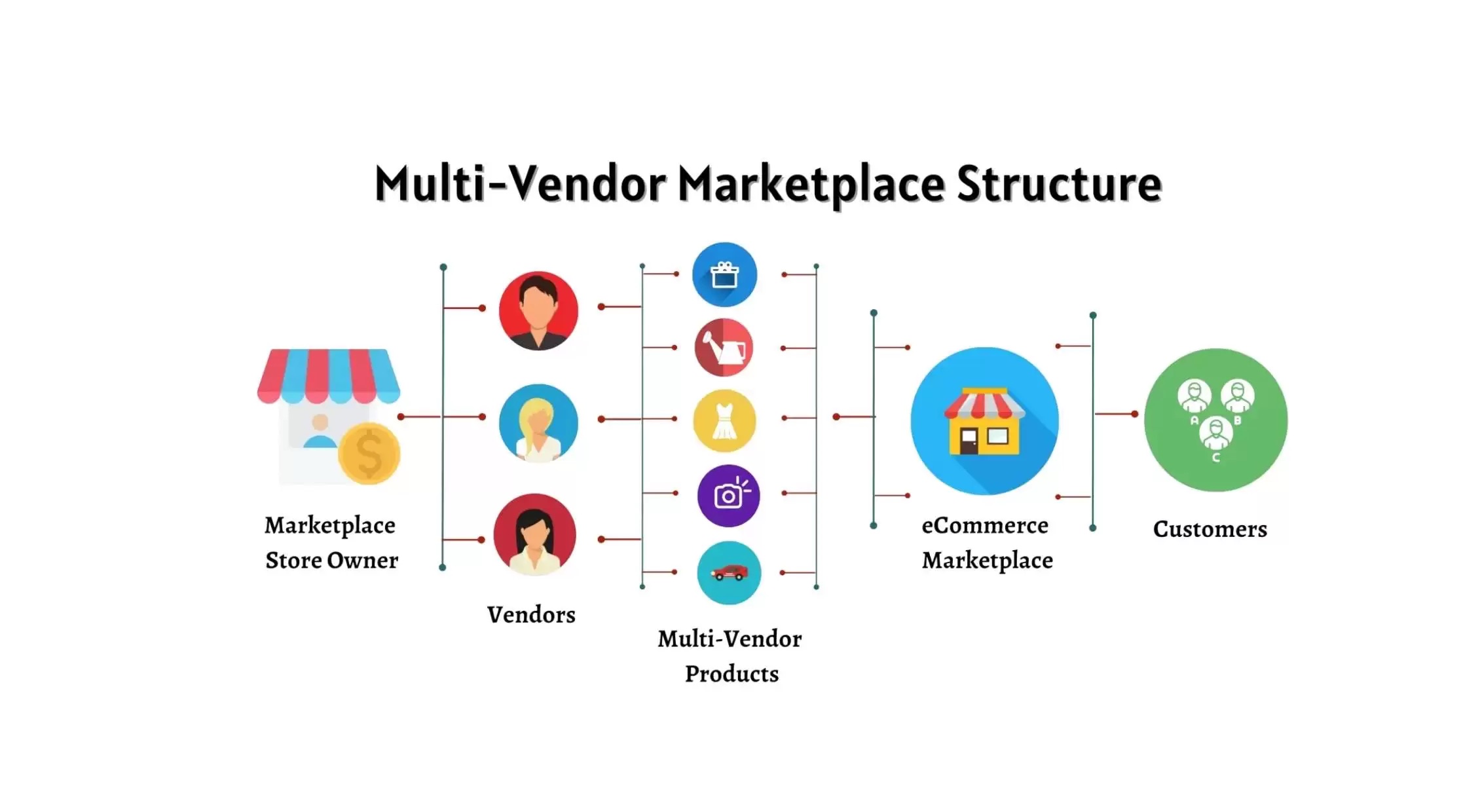
Unlike a single-vendor online store, an Amazon clone marketplace allows multiple independent sellers to operate under one digital umbrella, significantly expanding product variety and revenue potential. From a business perspective, investing in an Amazon clone script significantly reduces the complexity and cost of developing a marketplace from scratch. Traditional custom software development of a multi-vendor eCommerce platform can take months and require extensive financial investment in UI/UX design, backend architecture, payment gateway integration, security compliance, server optimization, and quality testing.
Single retailer holding private inventory, facing continuous procurement expenses, inventory risk, and limited catalog scaling.
Distributed vendor ecosystem where third-party merchants handle inventory and shipping while the platform operator takes automated commissions.
Deploying a tested Amazon clone foundation cuts development time from months to weeks with complete source code customizability.
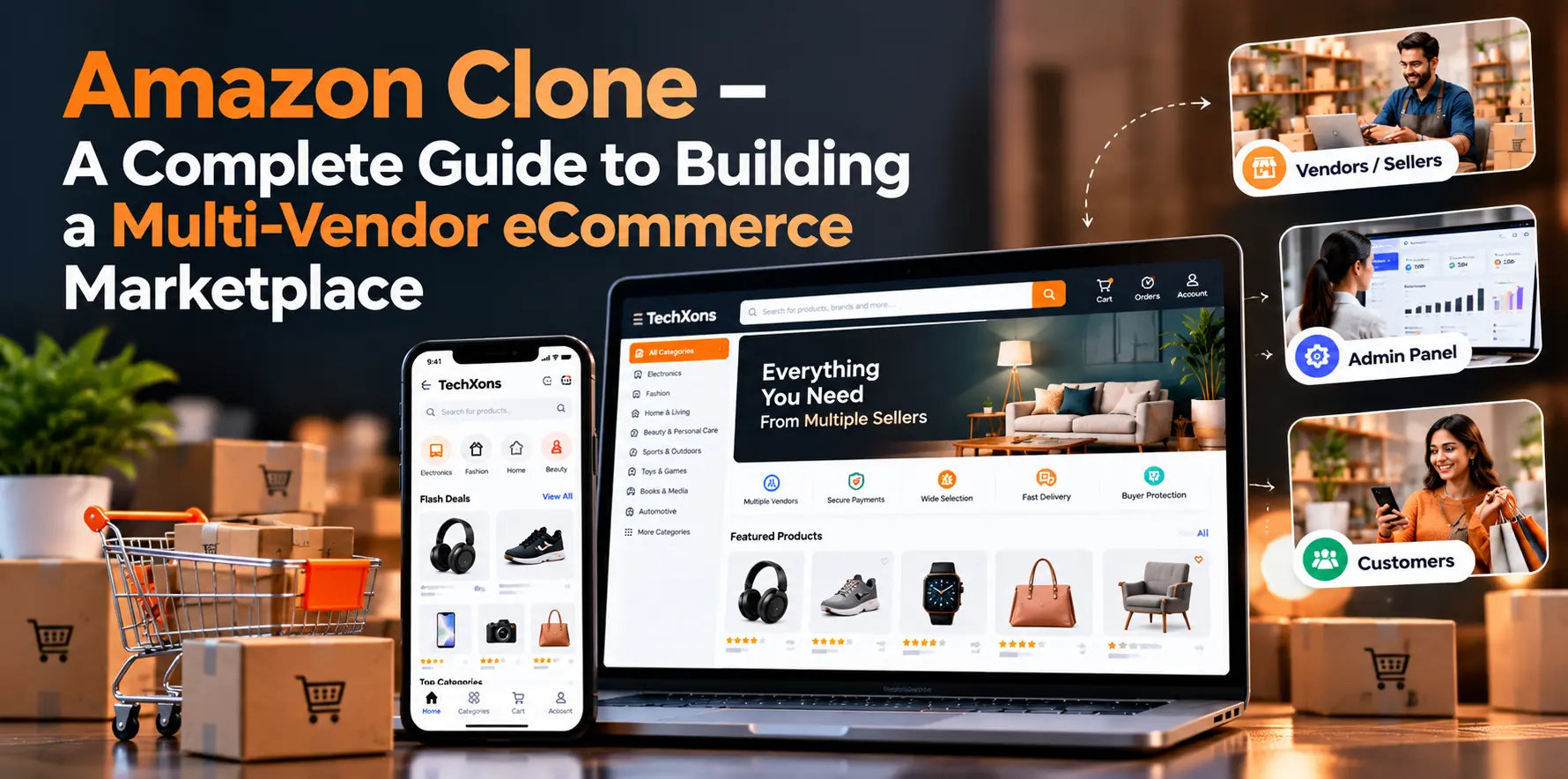
An effective Amazon clone website is structured around three primary user panels: the customer panel, the seller panel, and the admin dashboard. Each panel is engineered to serve distinct user journeys while maintaining synchronized data across the marketplace:
One of the most compelling aspects of launching an Amazon clone is its diverse monetization potential. Marketplace owners can generate predictable recurring revenue across multiple independent channels:
The foundational revenue driver: the platform operator retains a fixed percentage (e.g., 5% to 20%) or flat rate on every completed checkout before routing net balances to the seller.
Monthly or annual subscription plans (e.g., Free vs Professional Seller) that unlock unlimited listings, advanced reporting dashboards, and reduced transaction fees.
Merchants pay premium promotional fees to place their products at the top of category search results, homepage banners, and seasonal campaign carousels.
Partnering with integrated courier networks and fulfillment warehouses, earning margin on shipping labels, automated tracking, and returns processing.
Explore our ready-to-deploy multi-vendor foundation or consult with TechXons software architects to customize business logic, local payment gateways, and custom user portals.
Operating a high-volume marketplace requires high availability, strict transaction security, and cross-device responsiveness. Modern marketplace implementations follow three architectural pillars:
Synchronized iOS and Android applications connected via RESTful APIs, offering push notifications, biometric login, and fast mobile checkouts.
End-to-end SSL encryption, tokenized PCI-DSS compliant checkout, automated fraud detection heuristics, and escrow disbursement controls.
Containerized Docker/Kubernetes deployment, Redis session caching, Elasticsearch catalog indexing, and global CDN asset acceleration.
When choosing how to build your multi-vendor marketplace, comparing development models provides essential clarity on timeline, investment, and long-term control:
| Evaluation Metric | Ready-Made Amazon Clone Script | Bespoke Custom Development |
|---|---|---|
| Time to Market | 1 to 3 Weeks: Core buyer/vendor/admin workflows pre-tested and ready for deployment. | 3 to 6 Months: Full lifecycle scoping, database modeling, and iterative sprint cycles. |
| Capital Investment | Cost-effective; high ROI through pre-engineered modules and established architecture. | Significant upfront engineering budget covering specialized developers, PMs, and designers. |
| Code Ownership | 100% unencrypted source code ownership with self-hosted cloud control. | Full proprietary ownership governed by the custom software project agreement. |
| Customizability | High modularity: easily customize UI themes, payment gateways, and commission rules. | Infinite flexibility: tailored from the ground up to proprietary enterprise processes. |
Building an Amazon clone website in 2026 offers entrepreneurs a strategic opportunity to launch a scalable, secure, and feature-rich multi-vendor marketplace. By leveraging a battle-tested software foundation with dedicated vendor dashboards, native mobile apps, and automated split payments, businesses can enter the market rapidly while maintaining full customizability.
An Amazon clone script is a production-ready, multi-vendor eCommerce software suite engineered to deliver the core mechanics of Amazon—including customer apps, autonomous seller storefronts, shared cart checkout, automated commission split payments, and a centralized admin control panel.
The platform monetizes primarily through transaction commissions on completed vendor orders, monthly or annual seller subscription packages, featured product advertisements, banner placements, and logistics convenience fees.
Yes. The platform architecture is modular and flexible, allowing seamless adaptation to B2B industrial supplies, fashion boutiques, electronics, grocery delivery, artisan handicrafts, or localized regional marketplaces with custom payment integrations.
Deploying a foundational turnkey Amazon clone marketplace with brand styling and payment configurations typically takes 1 to 3 weeks. Tailored custom modules or regional integrations typically deploy within 3 to 6 weeks.
Yes. TechXons provides 100% unencrypted source code ownership for self-hosted deployment on your private cloud infrastructure, ensuring no vendor lock-in or recurring per-transaction software penalties.